1、 Gas lubricated bearings
Gas lubricated bearings are sliding bearings that use gas as a lubricant. The most commonly used gas lubricant is air, but nitrogen, argon, hydrogen, helium, or carbon dioxide can also be used as needed. The mechanism of forming a load-bearing gas film in gas lubricated bearings is the same as that in liquid lubricated bearings. Gas lubricated bearings utilize the transmission, diffusion, viscosity, thermal conductivity, adsorption, and compressibility of gas to form a complete gas film between friction pairs under the effects of fluid dynamic pressure, static pressure, and compression, which has the function of supporting loads and reducing friction.
Gas lubricated bearings are generally divided into three types: gas dynamic pressure bearings, gas static pressure bearings, and gas compression bearings. The lubrication state of actual bearings often exists in the form of dynamic and static pressure, dynamic and compression, static and compression, and dynamic, static, and compression mixed lubrication states. The mechanism of forming a load-bearing gas film in gas lubricated bearings is the same as that in liquid lubricated bearings.
2、 Composite material lubricated bearings
Due to the requirements of special production processes, certain key equipment in industrial and mining enterprises operate under extremely harsh working conditions. Due to heavy equipment, high environmental temperature, large dust or acidic corrosive gases in the air. The lubrication of equipment brings many problems, such as severe friction and wear. Currently, most of them still use traditional oil and grease lubrication, but in fact, these industrial and mining conditions have exceeded the scope of oil and grease lubrication. They are prone to bite or death of bearings and other friction pairs, causing serious part wear and damage, often leading to equipment shutdown.
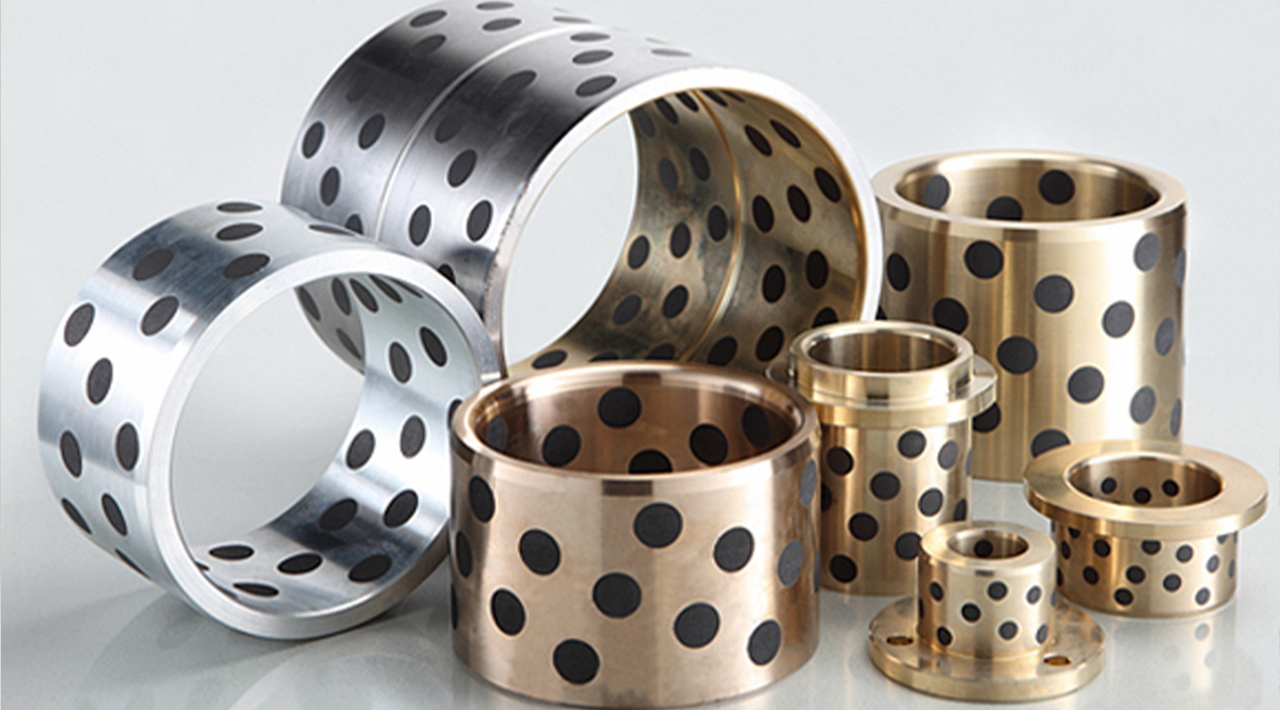
The composite material used in composite lubricated bearings is a new type of anti extreme pressure solid lubricating material, consisting of a metal substrate and a solid lubricant paste embedded in the holes or grooves of the substrate. During the friction process, the metal substrate bears the majority of the load. Through friction, solid lubricants in holes or grooves transfer or reverse transfer to the friction surface, forming a well lubricated, firmly attached, and uniformly covered solid transfer film on the friction surface, greatly reducing friction and wear. As friction progresses, the embedded solid lubricant continuously provides lubrication to the friction surface, ensuring good lubrication of the friction pair during long-term operation.
3、 Water lubricated bearings
Since the oil resource crisis in the 1970s and the increasing emphasis on environmental protection in recent years, hydraulic transmission technology has faced severe challenges, and water lubricated bearings have gradually been promoted and applied. Water lubricated bearings use water as the lubricant and working medium, which not only saves a lot of oil, but also avoids environmental pollution caused by traditional bearings that use oil as the lubricant. At the same time, water has the advantages of non pollution, wide sources, safety, and flame retardancy, making it an ideal lubricating medium. And it can also reduce key issues such as friction, wear, vibration, noise, and non functional wear of the friction pair. Therefore, the research on water lubricated bearings has important theoretical research and application value for improving mechanical efficiency and protecting the environment, and has become a hot topic of concern in various countries.